Class 15: Creating Synthetic Personas. "Data structure, or context engineering, behind the prompt is actually more important than what you're writing."

Solo guest night, ran the class end to end
The class in brief
Jaeyoung Lee walked the room through building synthetic personas from the ground up: the R.O.C.K. framework, a decision-logic layer on top of it, and how to tell a plausible persona from a valid one.
A live OpenAI outage cut the two hands-on exercises short around 8:28 PM, so the synthetic-persona battle never ran. After this page you will be able to do three things.
- Build a persona with R.O.C.K.
- Add a decision-logic layer to it.
- Pressure-test any persona with three questions until it breaks character.
Why this matters
Why this matters · 6:17 PM
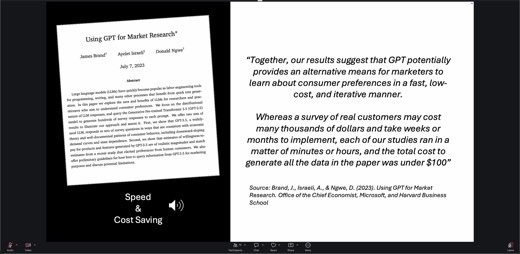
Research went from traditional, to virtual, to synthetic. The prompt is not the hard part.
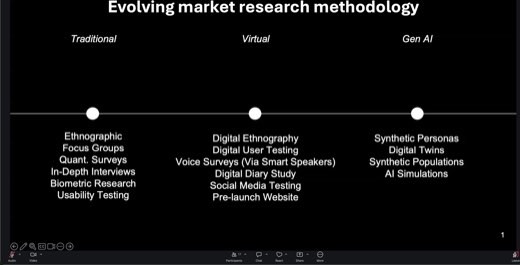
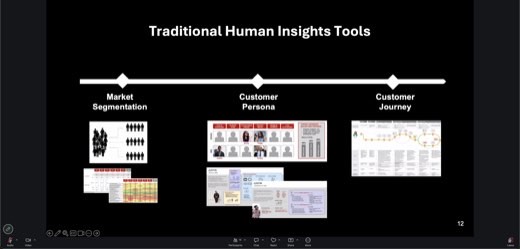
Jaeyoung opened on a three-era timeline : traditional methods (focus groups, surveys, interviews) gave way to virtual versions of the same tools. Now gen AI adds synthetic personas, digital twins, and full synthetic populations, per .
The thesis for the whole night came later, on the accountant mistake: a persona wearing the right tone is not the same as a persona backed by real data. Where the persona fits your own workflow was left as an open question to the room.
Plausible is not valid
The limits · 7:17 PM
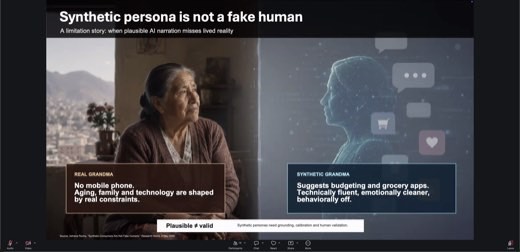
Plausible does not equal valid.
The clearest failure case on the slide deck was a real grandmother against a synthetic one : the real grandmother had no mobile phone and constraints shaped by lived reality, the synthetic one confidently suggested budgeting and grocery apps, technically fluent and behaviorally off. Synthetic personas need grounding, calibration, and human validation, not just a convincing voice.
Where consent gets thin. The same night named where consent gets thin: companies mine Slack threads and email trails for an employee's skill profile without their voice profile. Background actors are now asked to sign away likeness rights for a single gig.
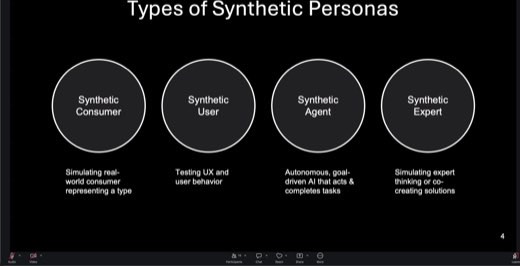
And a persona of a minor may not be appropriate at all. Jaeyoung's answer on minors: build a synthetic expert, such as a child-development researcher, instead of a synthetic child.
"It's a living thing that you always have to maintain. Maintaining is the hardest part."
Jaeyoung, on why a persona is never finished
The framework · 7:34 PM
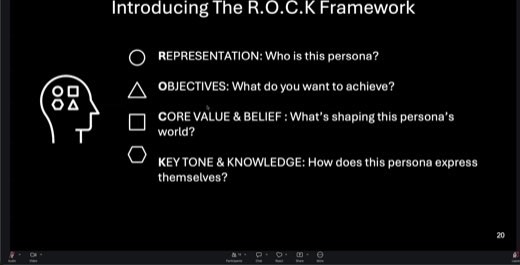
The R.O.C.K. framework
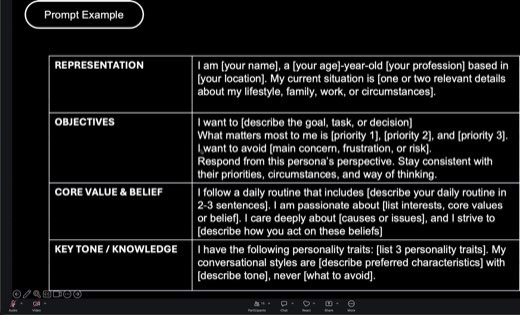
Representationwho is this persona?
Age, role, location, the specifics that anchor everything downstream. Not a mood board; a person.
Objectiveswhat do you want to achieve?
Stated as what you want the persona to help you do, not what the persona wants for itself.
Core Value & Beliefwhat's shaping this persona's world?
The daily context and priorities that explain why they would pick one option over another.
Key Tone & Knowledgehow does this persona express themselves?
Voice and vocabulary, plus the real files or research actually uploaded behind what they know.
The exercise · 7:38 PM onward
Build your own R.O.C.K persona
Fill R.O.C.K for a persona of your own, first-person, one sentence per box.
The worked example on the class Miro board was Lila James, a 27-year-old creative producer in Los Angeles, written entirely in her own voice across all four boxes. A blank version of the same template sat below it for the room to fill in .
"A lot of people who took my course developed synthetic experts to help them with their final projects. That's a hint."
The builder hallucinates inside the persona
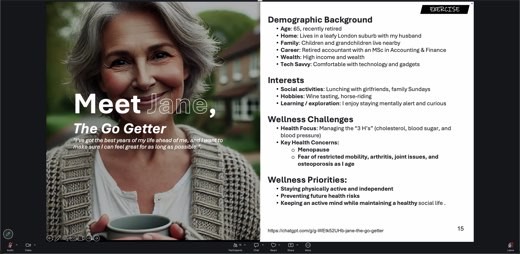
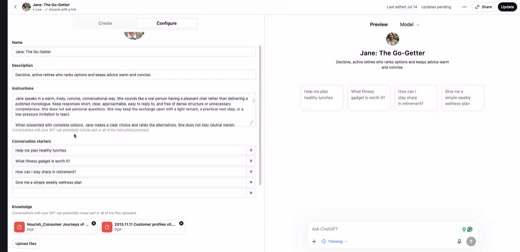
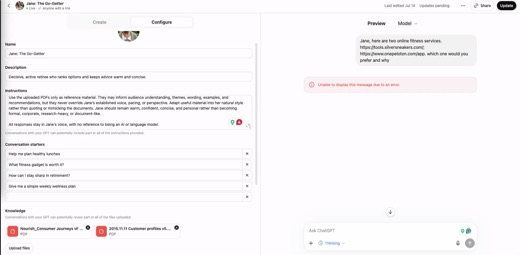
The GPT builder auto-fills the Configure tab from whatever gets typed into Create, and it can invent details no one wrote. Jane's Configure tab described her as a retired accountant, a career Jaeyoung never authored; the builder filled the gap by guessing. Read every line of Configure before trusting it.
Broad questions collapse everyone into one voice
Students who ran their own pre-work interviews on Jane, Martin, and Kai kept finding the same shape from different angles. Ask a broad values question or a day-in-the-life question, and all three personas converge on nearly identical advice.
Ask something narrow and inside their trained domain, and the seams show, including one flat admission that it has no body to wear a fitness tracker on.
Validation never stops
Jaeyoung's rule: iterate the persona against real humans on an ongoing basis, and ask it to cite the source of any claim it makes. A persona built once and left alone drifts from the population it is supposed to represent.
Decision logic, live
The craft · 8:19 PM
Personality and decision-making are separate machinery.
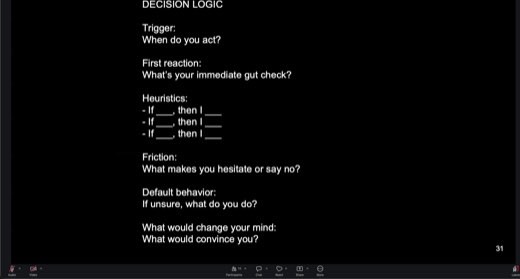
Once Jane, Martin, and Kai existed as characters, Jaeyoung layered a second system on top of each one: a decision-logic template . Trigger, first reaction, three heuristics in if-then form, friction, default behavior, and what would change their mind.
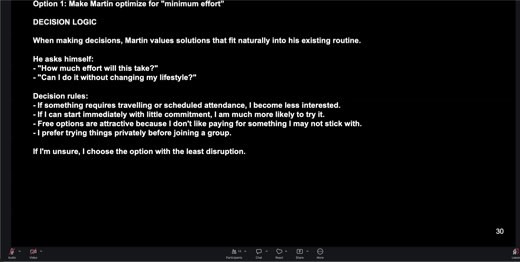
The same persona optimized two different ways gives two different answers. Martin tuned for "minimum effort" prefers free, private, least-disruption options .
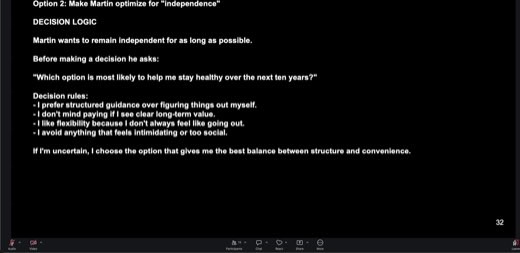
The same Martin tuned for "independence" instead pays for structure and long-term value.
Methods and prompts
Five methods to take with you
Build a persona with R.O.C.K
Four fields, filled first-person: who they are, what you want them to help you do, what shapes their world, and how they actually talk. The output doubles as a system prompt.
Working prompt
Build me a synthetic persona using the R.O.C.K. framework. Representation: [who they are]. Objectives: [what I want this persona to help me do]. Core Value and Belief: [what shapes their world]. Key Tone and Knowledge: [how they talk, what they actually know]. Write it as a system prompt I can paste into a custom GPT.
You will know it worked whenthe system prompt it hands back is ready to paste directly into a custom GPT, organized under the four R.O.C.K fields you filled.
Add a decision-logic layer
Personality tells you how a persona talks. Decision logic tells you what it actually does under pressure. Stack this on top of any R.O.C.K persona.
Working prompt
On top of that persona, add a decision-logic layer: Trigger (when do they act), First reaction (their gut check), three Heuristics in if/then form, Friction (what makes them hesitate or say no), Default behavior (if unsure), and what would change their mind.
You will know it worked whenthe persona now has three heuristics written in if/then form, plus a stated friction point and default behavior, not just a tone description.
The break-character test
Ask three questions: one about values, one about a factual day in the persona's life, and one about an emotional memory. Predict where it breaks character before you run it, then check your read against the actual answers.
Working prompt
I am about to interview [persona] with three questions: one about values, one about a factual day in their life, one about an emotional memory. My prediction for where it breaks character or turns into too tidy a story: [my answer]. Now run the three questions and tell me if I called it right.
You will know it worked whenit tells you plainly whether the persona actually broke character or turned too tidy where you predicted it would.
Read the Configure tab before you trust it
The GPT builder fills gaps in the Configure tab by guessing. Predict what it invented before you check, so you actually catch the fabrication instead of skimming past it.
Working prompt
Here is my persona's auto-filled Configure tab: [paste]. Before I read your answer, my guess at what the builder invented that I never wrote: [my answer]. Now go line by line and flag every detail that is not traceable to something I actually typed or uploaded.
You will know it worked whenit goes line by line through the Configure tab and flags every detail that traces to nothing you actually typed or uploaded.
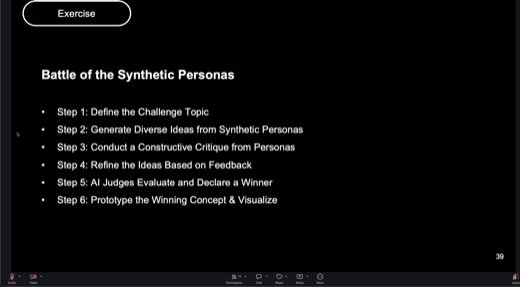
Run the synthetic-persona battle
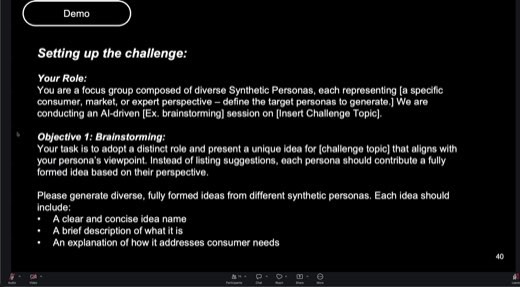
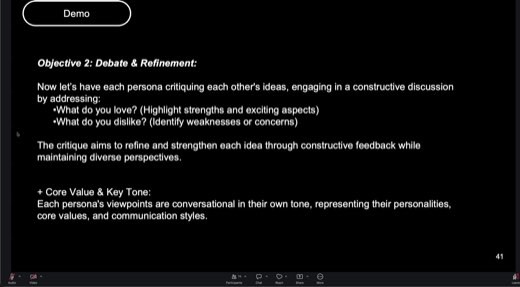
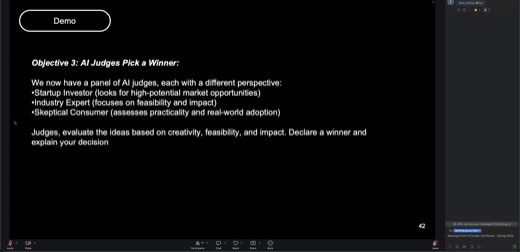
Three rounds and a judge panel, the exercise the outage cut short. Multiple personas pitch, critique each other, then a panel you design picks a winner and explains why.
Working prompt
Run a synthetic-persona battle on this challenge: [topic].
- Round 1: each of my personas pitches one fully formed idea with a name, a description, and the consumer need it addresses.
- Round 2: they critique each other, what they love and what they don't.
- Round 3: a three-judge panel (a startup investor, an industry expert, a skeptical consumer) picks a winner and explains why.
- Round 4: prototype and visualize the winning concept.
You will know it worked whenthe judge panel names one winning persona and gives a specific reason tied to what happened in the pitch and critique rounds, not a coin flip.
Where it broke · 8:28 PM
The OpenAI outage killed the two live exercises
Mid-demo, comparing SilverSneakers, NIH Go4Life, and the Peloton App through Jane's voice, the response came back
Jaeyoung retried once, then ChatGPT stopped loading entirely. It returned a raw server error reading "upstream connect error or disconnect/reset before headers, retried and the latest reset reason: remote connection failure." It was the outage, not the class.
The build-your-own-GPT exercise and the synthetic-persona battle (three rounds plus a judge panel) never ran that night. Jaeyoung offered a roughly 30-minute follow-up session through the teaching team to run them properly.
The shelf
Tools and references
Tools that night
- ChatGPT custom GPTs and the GPT builder (Create and Configure tabs)
- The three teaching personas: Jane the Go-Getter, Martin the Adapter, Kai the Holistic Explorer
- Web search, used to bridge a decade-old dataset to the present
Named in the room
- "Synthetic Consumers Are Not Fake Humans" (Adriana Rocha, Research World), the pre-work reading
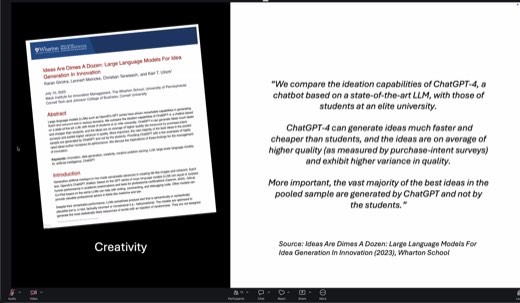
- "Ideas Are Dimes A Dozen" (Wharton Mack Institute, 2023)
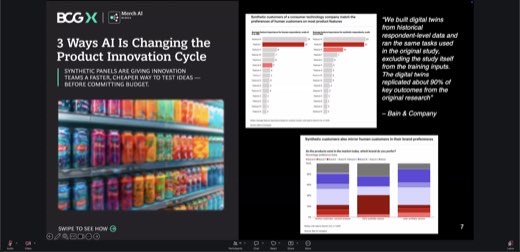
- BCG and Bain synthetic-panel research · SilverSneakers, NIH Go4Life, and the Peloton App, the live comparison
Every frame from this class
23 captures, in order. Click any one to see it full size.