Class 21: Storytelling and Story Systems. "A good story creates content. A great story creates change."

Ex-McCann, ex-Martin Agency, ex-Braze innovation lab
The class in brief
Guest storyteller Sharon Panelo taught how to turn an invented object into a behavior, a memory, and a story that spreads. The night followed one arc: Shakespeare's five acts mapped onto business storytelling, followed by three sprints for the capstone teams.
After this page you can build a story with a real enemy in it, write its December 2030 future headlines, and villain-mode your own idea before anyone else does.
The question of the night
Why this matters · 6:14 PM
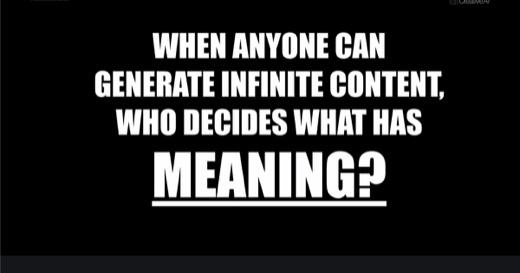
When anyone can generate infinite content, who decides what has meaning?
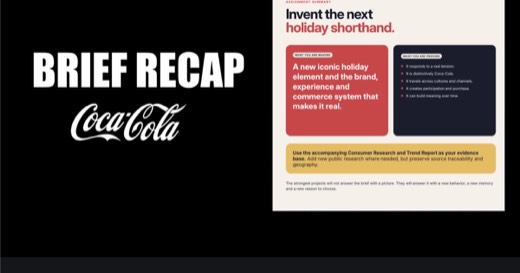
Sharon opened on the capstone brief itself, then put up the night's real question : how do you turn an invented object into a behavior people choose, a memory people keep, and a story people spread.
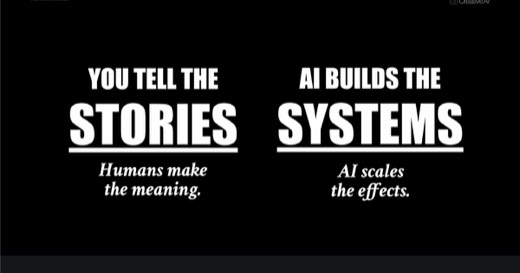
Her answer to the AI era's flood of content is a division of labor : you tell the stories and make the meaning; AI builds the systems and scales the effects.
The framework · 6:22 PM
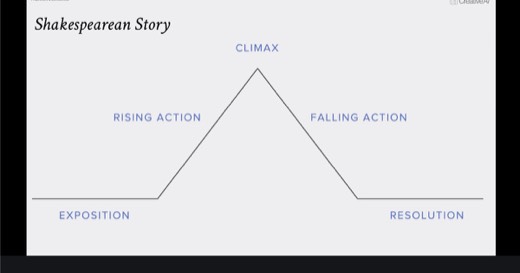
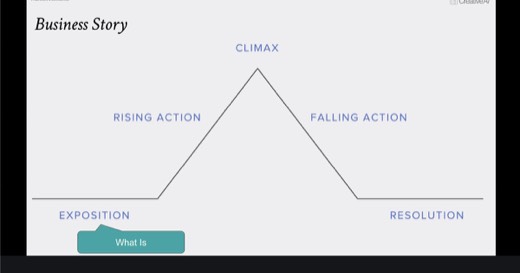
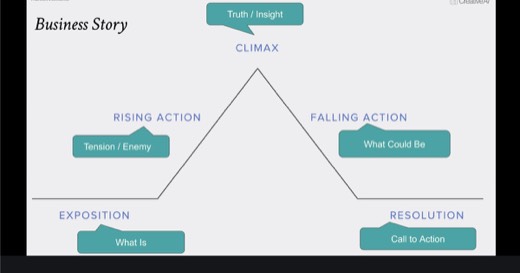
The five-act business story
What isexposition
The world today, stated plainly. The audience has to recognize it before anything can change.
The tension, the enemyrising action
The thing to push against. It can be consumerism, apathy, or "Christmas doesn't mean anything to me anymore." No enemy, no story.
The truth, the insightclimax
The critical insight that flips the script on the tension.
What could befalling action
The vision of the promised land the insight makes possible.
The call to actionresolution
Urgency: the cliffhanger or the ask that turns the audience into participants.
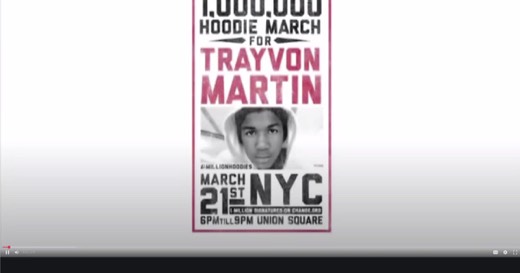
The proof case was Million Hoodies , from her McCann years: a behavior, a hashtag, and a petition that put a poster on the front page of The New York Times the next day. It is where the night's headline line comes from .
The exercise · 6:35 PM
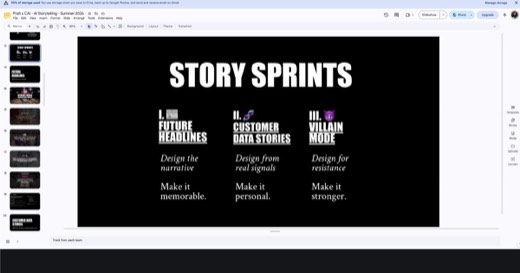
Three story sprints for the capstone
Every team picks a track and runs it on their holiday concept.
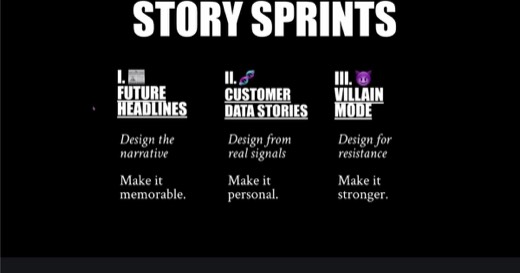
- Future headlines: design the narrative, make it memorable.
- Customer data stories: design from real signals, make it personal.
- Villain mode: design for resistance, make it stronger .
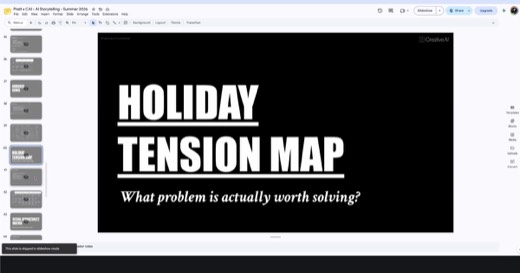
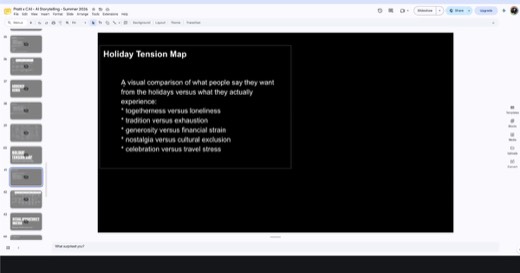
Grounded first in the holiday tension map : what people say they want from the holidays versus what they actually experience
Future headlines, demonstrated on Wendy's
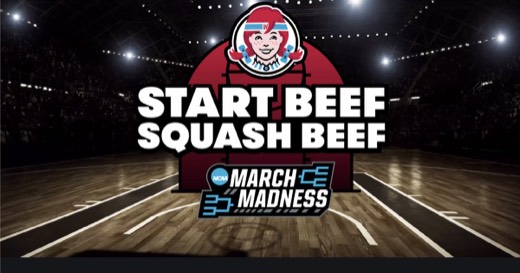
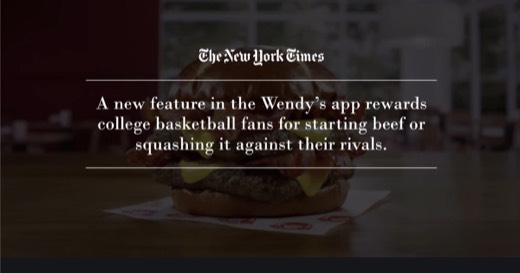
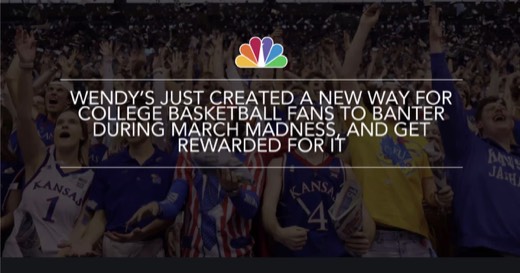
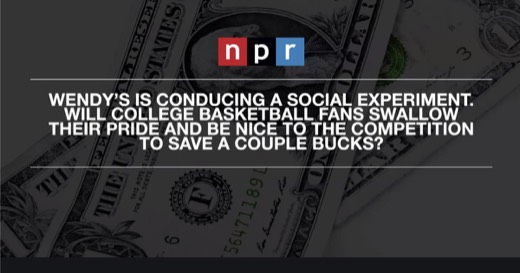
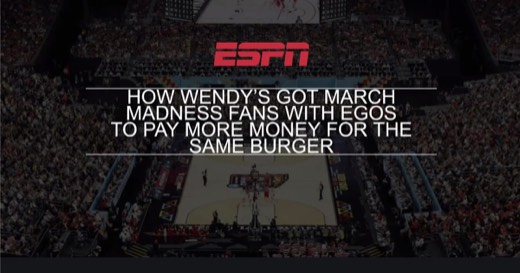
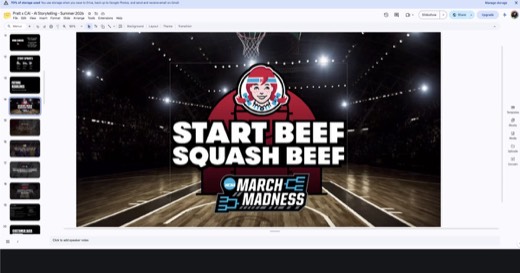
December 2030, your idea is culture: write the culture, business, and human headlines, then ask what would have to become true . She showed one idea wearing four publications' voices: The New York Times, NBC, NPR, and ESPN, each reading Wendy's March Madness "Start Beef, Squash Beef" differently .
Tony's addition was to mock the winning headline up as a magazine cover for the deck.
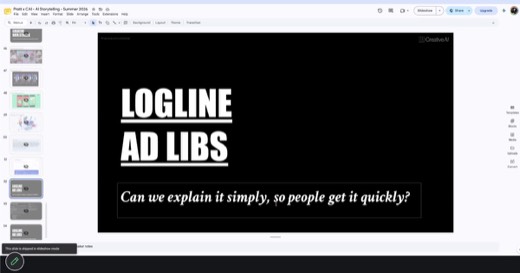
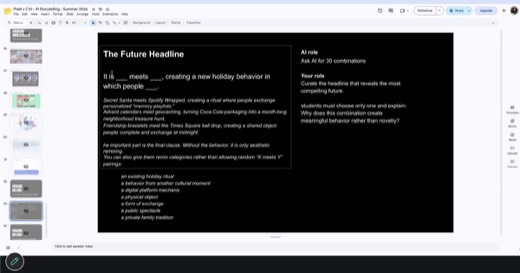
Logline ad libs
"It is ___ meets ___, creating a new holiday behavior in which people ___." Ask AI for 30, curate one . Her warning is the whole lesson: the final clause is the point. Without the behavior, it is only aesthetic remixing.
Ritual prototype, shared but cut for time
The questions that turn an object into a ritual: what triggers it, who initiates, what is the response, is there gamification. The ice bucket challenge is the mechanism to study.
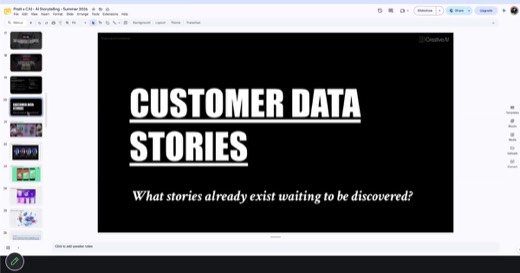
Customer data stories
The craft · 6:48 PM
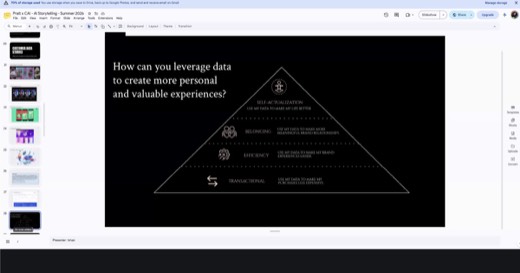
The best stories are already sitting in the brand's own data.
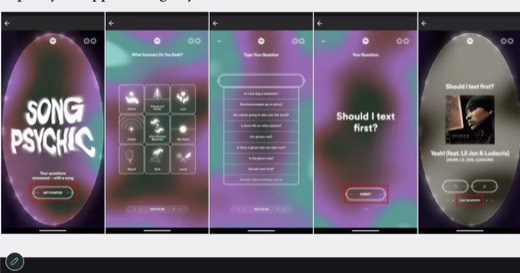
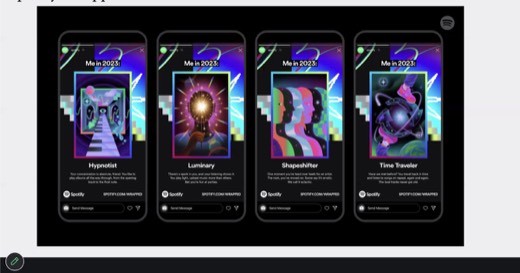
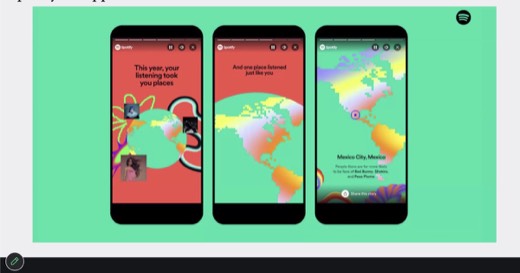
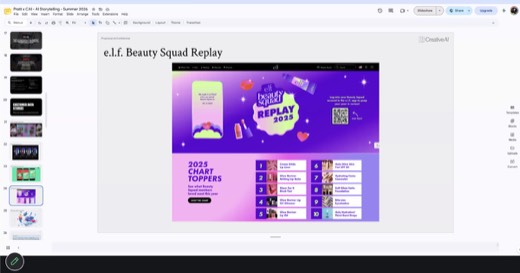
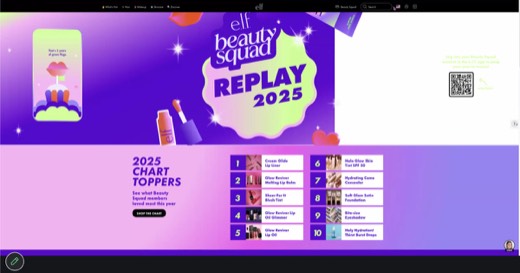
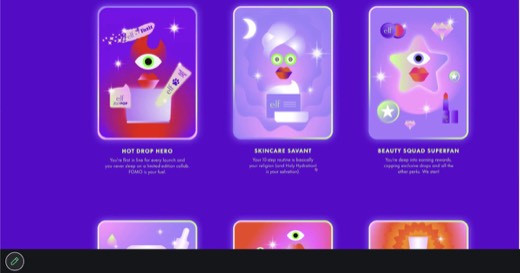
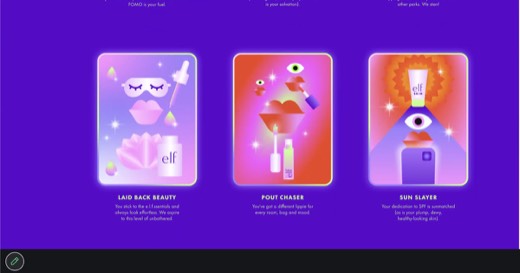
Track II is mining what the brand already knows: Spotify's Sound Town and Wrapped Personas turn listening data into rituals, and e.l.f.'s Beauty Squad Replay does it with live sales data, shown on the real site during class.
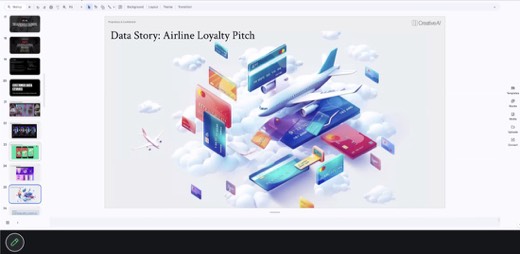
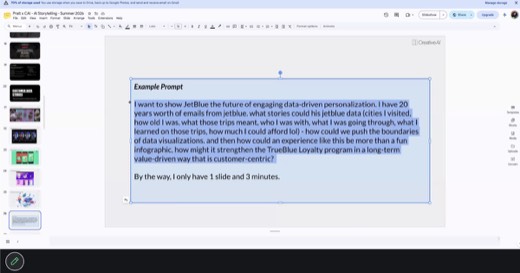
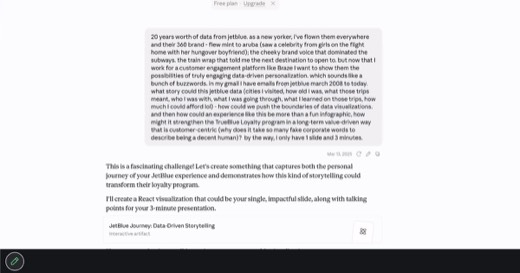
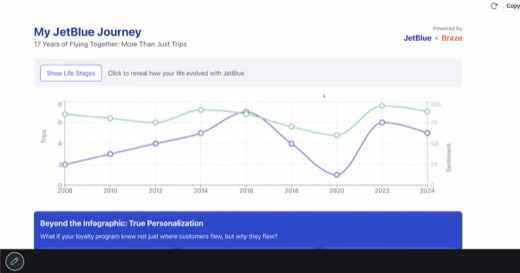
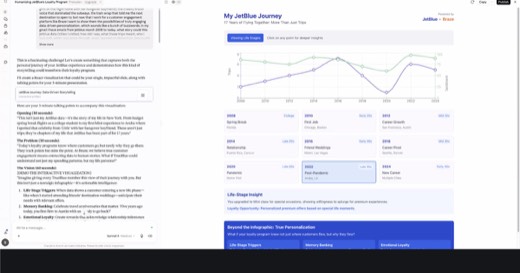
Her own proof was a concept prototype, not an analysis of real records: a JetBlue loyalty pitch she built with Claude in minutes, from a prompt describing 20 years of her own JetBlue emails without supplying the emails themselves , which Claude answered with invented data Sharon said pretty much matched her real life .
Her prompt asked for twenty years; the artifact Claude built covers seventeen, 2008 to 2024, a three-year gap between what she described and what it delivered.
The judgment · 6:58 PM
Attack your idea at the end, when the criticism can still make it stronger.
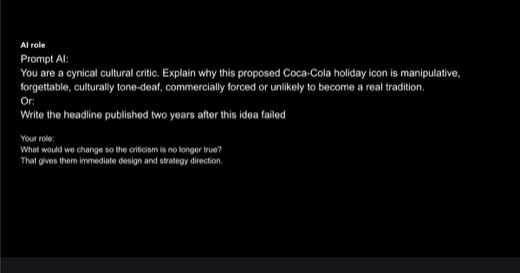
Villain mode is a cynical cultural critic pointed at your own concept : manipulative, forgettable, culturally tone-deaf, commercially forced, unlikely to become a real tradition. Or a colder version of the same prompt: write the headline published two years after this idea failed.
Her rule, answering a question from the room: use it at the END to anticipate objections, never at the start to kill ideas. The design move is the follow-up question: what would we change so the criticism is no longer true.
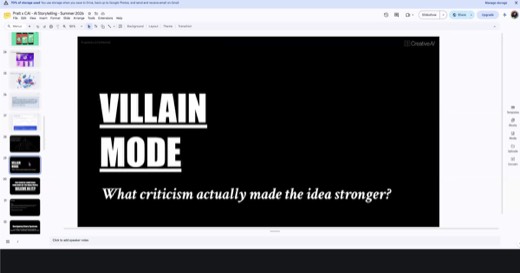
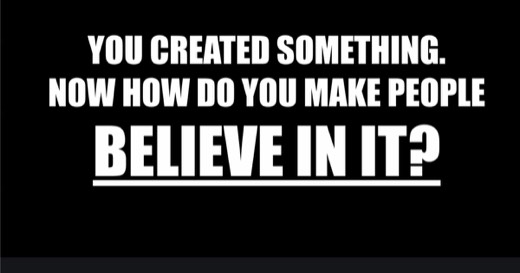
"You created something. Now how do you make people believe in it?"
Sharon's pivot slide into villain mode
Methods and prompts
Five methods to take with you
Future headlines
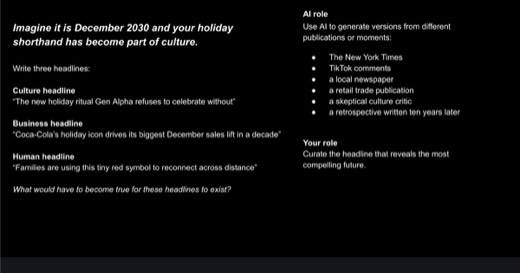
Jump to December 2030 and write the culture, business, and human headlines your idea would earn, then work backward to what has to become true. AI writes the publication voices; you curate the future worth building.
Working prompt
It is December 2030 and my idea [describe it] has become part of culture. Write its culture headline, business headline, and human headline. Then rewrite the best one as The New York Times, TikTok comments, a local paper, a trade publication, a skeptical critic, and a ten-year retrospective. End with: what would have to become true for these to exist?
You will know it worked whenthe headline gets rewritten in each named publication voice with a genuinely different tone, and it ends by naming what would have to become true first.
Logline ad libs
Force the idea into one sentence with a behavior clause it cannot dodge. Thirty from the machine, one from you, and the "why" has to defend behavior over novelty.
Working prompt
Give me 30 versions of: "It is ___ meets ___, creating a new holiday behavior in which people ___" for my idea [describe it]. Pull the blanks from: existing rituals, other cultural moments, platform mechanics, physical objects, forms of exchange, public spectacles, private traditions. The final clause must name a real behavior.
You will know it worked wheneach of the thirty versions ends with a specific human behavior named in its final clause, not just a restated feature or benefit.
Mine the data story
Sharon's JetBlue prompt is a concept-prototyping model, not a real-data analysis: describe the human context and years of real experience you have, let AI invent plausible data to mock up the story, then push past the infographic to lasting value. Before calling any result a story mined from real data, validate it row by row against the actual records.
Working prompt
I have [describe the data you actually hold] spanning [time]. What stories live in this data: where I was, what it meant, who I was with, what changed? Push past a fun infographic: how does this become a long-term, customer-centric experience? Constraint: I get one slide and three minutes.
You will know it worked whenthe idea it lands on fits inside one slide and three minutes, and goes past a one-off infographic to something that plays out over time.
Villain mode
The cynical critic, deployed at the end. The output you keep is not the criticism; it is your answer to "what would we change so the criticism is no longer true."
Working prompt
You are a cynical cultural critic. Explain why my idea [describe it] is manipulative, forgettable, culturally tone-deaf, commercially forced, or unlikely to become a real tradition. Then write the headline published two years after it failed. I will answer with what we would change so the criticism is no longer true.
You will know it worked whenthe failure headline names a specific reason the idea flopped, not a vague warning, giving you something concrete to answer with a real fix.
The story KPI test
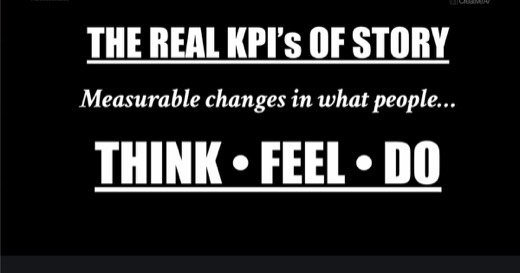
Before shipping any story, name which of the three it measurably changes: what people think, what they feel, or what they do. Then check it carries all five acts, especially the enemy.
Working prompt
Here is my story: [paste]. I will do the judging first, then you check me. My call on which it measurably changes (THINK, FEEL, or DO): [your answer]. My mapping to the five acts (what is, the tension/enemy, the insight, what could be, the call to action): [your mapping]. Now grade my two answers, tell me where I am wrong, and be honest if the story moves nothing.
You will know it worked whenit tells you honestly whether your story actually moves nothing, and grades your own THINK, FEEL, or DO call against your five-act mapping.
The close · 6:59 PM
From one story to a story system
Sharon's closing frame : the assignment is not one story but a system that shapes participation, behavior, and meaning over time. The rest of the night belonged to the capstone teams in breakout rooms.
Her prompt pack, the headlines, villain mode, tension map, ad libs, and ritual prototype, was promised to Tony for distribution and lands in the course pack when it arrives.
In the Q&A that followed, Tony raised a student's idea for a new holiday sound mnemonic. Sharon pointed the class to Suno for sonic branding experiments, calling audio branding a genuine hook worth pursuing.
Try this prompt
Quiz me on Sharon's five-act business story and the three story sprints. Then give me a small idea and make me run future headlines and villain mode on it.
You will know it worked whenit quizzes you on the five-act business story and the three story sprints first, then makes you run future headlines and villain mode on a small idea.
The shelf
Tools and references
Tools that night
- Claude, used live for the JetBlue loyalty pitch and its interactive artifact
- Sharon's prompt pack (headlines, villain mode, tension map, ad libs, ritual prototype), promised to Tony for the class
- Suno, pointed at for sonic branding directions
Named in the room
- Million Hoodies (McCann) · Wendy's Start Beef, Squash Beef
- Spotify Wrapped, Song Psychic + Sound Town · e.l.f. Beauty Squad Replay
- JetBlue TrueBlue · the ice bucket challenge, as ritual mechanics
Every frame from this class
43 captures, in order. Click any one to see it full size.